By Warefa Pereke.
April 1, 2025.
Tricycle riders in Delta State have taken to the streets to protest against what they describe as an oppressive policy imposed by the State Government. The riders are resisting the mandatory purchase of stickers, aprons, and waste baskets, which they claim will add an extra N12,000 to their operational costs.
According to the riders, this new requirement is in addition to the daily operational ticket fee of N300, which they are already paying. The riders view this move as an attempt by the State Government to exploit them, and they are demanding that the policy be reversed.
The protest, which is gaining momentum, has brought attention to the plight of tricycle riders in the state. The riders argue that the additional levies will not only affect their livelihoods but also increase the cost of transportation for commuters.
The recent increase in the pump price of fuel in Nigeria has further exacerbated the situation, making it difficult for the riders to balance their daily expenses. Moreover, the rising cost of tricycle spare parts and maintenance fees has been a significant burden on the riders.
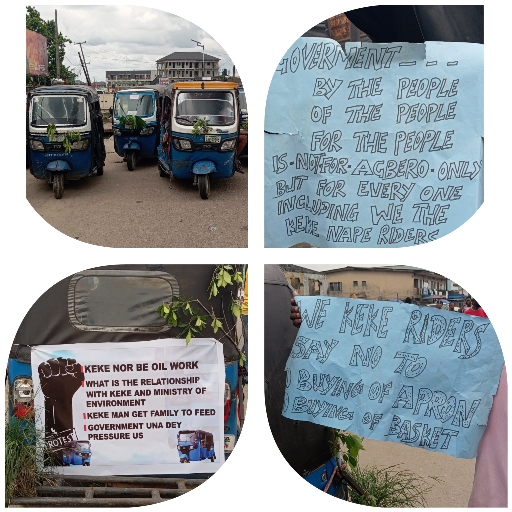
The tricycle riders were seen blocking the popular Enerhen junction and Deco junction in Warri, barring other tricycle riders from carrying passengers. Many were carrying placards with inscriptions like ” Government of the people, for the people and by the people – not for Agbero alone, but for everyone including we the keke riders.” “We keke riders say no to buying of stickers and aprons.” “Keke no be oil work.” Etc.
“We were already struggling to make ends meet before this new policy was introduced,” said one of the protesting riders. “The cost of spare parts and maintenance has gone up significantly, and we can barely afford to keep our tricycles on the road. This new policy is just the final nail in the coffin.”
The riders are calling on the Delta State Government to reconsider the policy and engage with them in a dialogue to find a more sustainable solution. They argue that the government should prioritize the welfare of its citizens, rather than imposing draconian policies that stifle economic growth.
As the protest continues, it remains to be seen how the Delta State Government will respond to the riders’ demands. One thing is certain, however: the tricycle riders of Delta State will continue to fight for their rights and the rights of their passengers.
The riders are urging the government to consider the human impact of its policies and to work towards finding solutions that will alleviate the economic pressures faced by tricycle riders and their families.