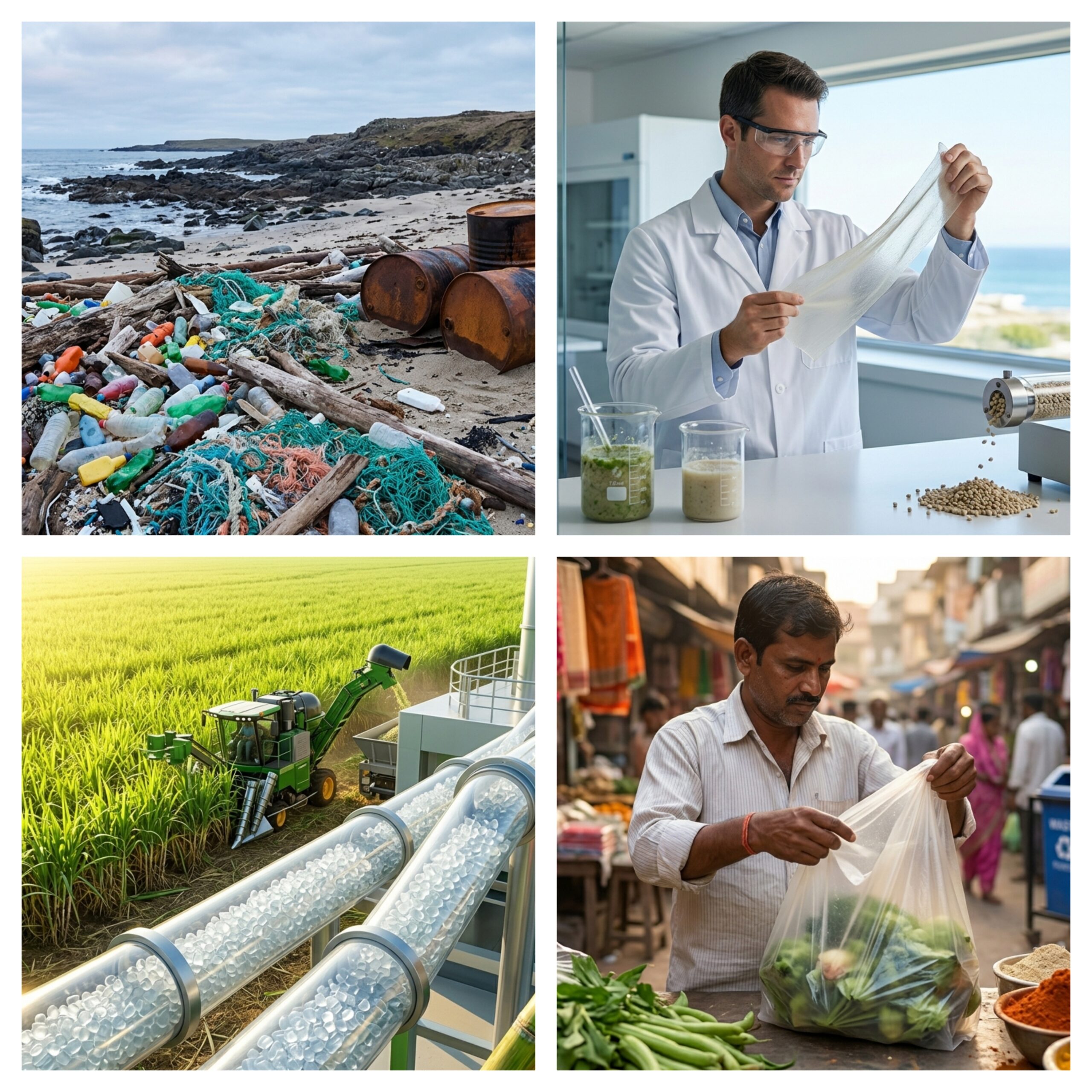
The world has a massive plastic problem. Traditional plastic lasts for hundreds of years, breaking down into tiny pieces that pollute our water and food. To fix this, scientists and governments around the world are working hard to create “bioplastics”—materials made from plants that can break down naturally without harming the earth.
The United States is leading the way in creating these new materials. American companies are using bacteria to turn plant sugars into a special type of plastic that can dissolve safely even if it ends up in the ocean.
In Germany, the focus is on building a complete system. German researchers are perfecting a plant-based plastic called PLA. At the same time, the government is making sure these new materials are matched with the right composting systems so they actually break down properly.
China, traditionally the world’s biggest maker of regular plastic, is now shifting its massive factories toward eco-friendly options. Because China can manufacture things on such a huge scale, its efforts are helping to lower the price of bioplastics for the rest of the world.
In Brazil, innovators are using the country’s massive sugarcane crops to make plastic. This sugarcane plastic looks and feels just like regular plastic, but it is much better for the climate because the plants absorb carbon dioxide while they grow.
India is taking a local approach to fight its waste problem. Inventors there are using local crops like cassava, corn starch, and farming waste to make bags and packaging. These materials are designed to break down easily at home without needing special industrial factories.
Finally, Italy is a leader in making eco-friendly food packaging. Since food-covered plastic is hard to recycle, Italian companies make packaging that can be thrown straight into the food waste bin to compost naturally.
Switching away from regular plastic is still difficult because plant-based options can be expensive to make. However, the hard work of these nations proves that with creativity and cooperation, we can stop relying on fossil fuels and better protect our planet.