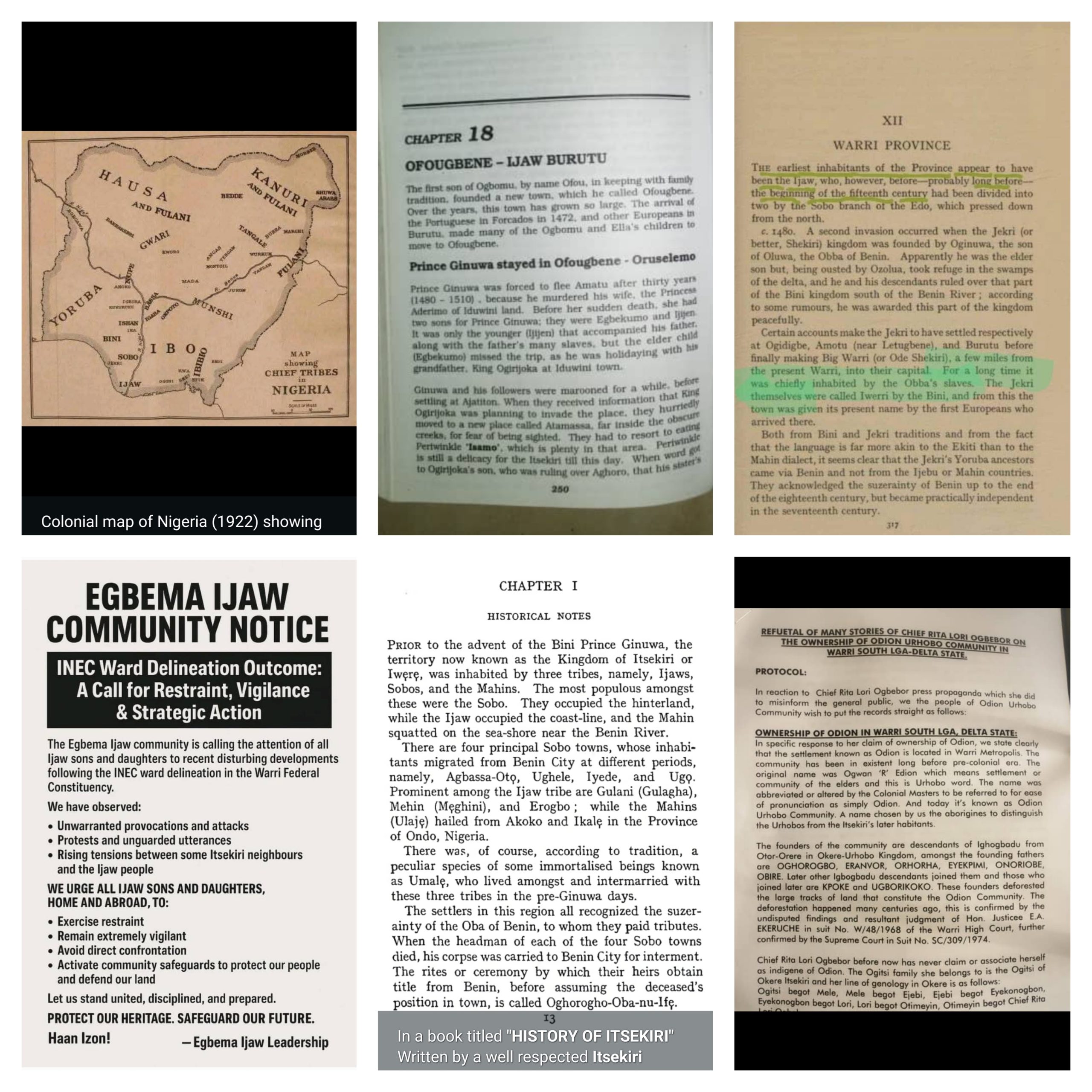
By Ezon Efie Media Correspondent.
Warri, Delta State
June 16, 2025.
In many jurisdictions, there is a common misconception that all landowners must possess documentation to prove their ownership. However, this assumption overlooks the rights of indigenous people who have occupied and utilized land for generations. In this article, we will explore the concept of land ownership, particularly focusing on the distinction between those who possess land by birth and those who acquire it through other means.
For individuals who inherit land through their family or community, particularly in indigenous or traditional settings, the concept of ownership is often rooted in customary law and historical occupation. In many cases, these individuals may not require formal documentation to assert their ownership rights. Their claim to the land is based on their ancestral heritage, cultural ties, and long-standing possession.
This principle acknowledges the historical and cultural significance of land to indigenous communities. It recognizes that their relationship with the land predates modern legal frameworks and documentation requirements. In essence, their ownership is not necessarily contingent on paper documentation but rather, on their ancestral connection to the land.
On the other hand, individuals who acquire land through purchase, inheritance from non-indigenous owners, or other means, typically require formal documentation to establish their ownership rights. This documentation can take various forms, such as:
- Deed of Assignment: A document that transfers ownership of land from one party to another.
- Deed of Conveyance: A legal document that transfers ownership of land, often used in sales or transfers.
- Certificate of Occupancy: A document that grants the holder permission to occupy and use a particular piece of land.
- Other signed documents, agreements and treaties: These could also grant the holder permission to occupy and use a particular piece of land for some specified time, depending on the terms and conditions.
These documents serve as proof of ownership and help to establish a clear chain of title. They are essential for securing property rights, facilitating transactions, and resolving disputes.
Recognizing the rights of indigenous landowners without requiring formal documentation is crucial for several reasons:
- Cultural Preservation: It acknowledges the historical and cultural significance of land to indigenous communities, allowing them to maintain their connection to their ancestral lands.
- Social Justice: It promotes fairness and equity by respecting the traditional ownership rights of indigenous people, rather than imposing modern documentation requirements that may be unfamiliar or inaccessible to them.
- Conflict Resolution: By acknowledging indigenous ownership rights, we can reduce the likelihood of land disputes and conflicts that often arise from competing claims.
So, the notion that all landowners require documentation to prove their ownership is an oversimplification. For those who possess land by birth, their ancestral connection and historical occupation are sufficient to establish their ownership rights.
In contrast, those who acquire land through other means require formal documentation to secure their property rights.
This clarification is necessary because of the debate surrounding land ownership in Warri, which has sparked intense discussions, with various claims and counter-claims emerging. These claims and counterclaims have been flying in various social media platforms, leading and misleading people.
One such claim, made by the Itsekiris, suggests that they possess documents verifying their ownership of Warri. However, a closer examination reveals that these documents do not necessarily prove ownership, but rather indicate customary tenancy.
Customary tenancy refers to a system where individuals or groups acquire land from indigenous and non indigenous owners through various means, such as purchases, grants, leases, or other arrangements. In the context of Warri, the Itsekiris’ possession of documents is a clear indication that they acquired land from the indigenous owners, namely the Ijaws and Urhobos. This would imply that the Itsekiris are customary tenants, rather than the outright owners of the land.
It is an established fact that the Urhobos who are the indigenous owners of Ughelli can never provide documents to prove their ownership of Ughelli. The Ijaws of Odimodi need not possess documents from the British or whomever to prove their ownership of Odimodi. The indigenous people of Okpe land need no documents as a proof of ownership of their ancestral lands. Also the Isokos of Oleh need no documents to prove that they own the land of Oleh. In the same manner, the true and indigenous owners of Warri do not need any documents to prove their ownership of Warri.
So, the Ijaws and Urhobos, as the indigenous owners of Warri, do not require documents to prove their ownership. Their ancestral connection to the land, historical occupation, and cultural ties are sufficient to establish their ownership rights. This principle is rooted in customary law and international human rights standards, which recognize the rights of indigenous peoples to their ancestral lands.
No wonder, William A. Moore, a well respected Itsekiri Historian, in his book titled “HISTORY OF ITSEKIRI”, published in 1970 by Cass publishers, admitted that: “Prior to the advent of the Bini Prince Ginuwa (who founded the Itsekiri nation), the territory now known as the Kingdom of the Itsekiris or Iwere, was inhabited by three tribes, namely, the Ijaws, the Sobos (Urhobos) and the Mahins.” This shows that the Ijaws and the Urhobos were already inhabiting the area called Warri as indigenous people before the arrival of the Itsekiris. This appeared in the first sentence of the first chapter.
While documents are essential for establishing ownership rights in many contexts, they are not necessary for indigenous peoples who have historically occupied and utilized the land. The absence of documents such as leases, deeds (of conveyance and assignment), and agreements among the Ijaws and Urhobos is not a weakness in their claim to the ownership, but rather a reflection of their indigenous status.
The misconception that the Itsekiris’ possession of documents automatically grants them ownership of Warri stems from a lack of understanding about customary tenancy and indigenous rights. It is essential to recognize that the Ijaws and Urhobos are the rightful owners of Warri, and any claims to ownership by other groups must be evaluated in the context of customary law and indigenous rights.
In conclusion, the debate surrounding Warri land ownership requires a nuanced understanding of customary tenancy and indigenous rights. While the Itsekiris may possess documents indicating customary tenancy, the Ijaws and Urhobos are the indigenous owners of Warri, with their ownership rights rooted in ancestral connection, historical occupation, and cultural ties. Recognizing and respecting the rights of indigenous peoples is essential for promoting social justice, cultural preservation, and conflict resolution.