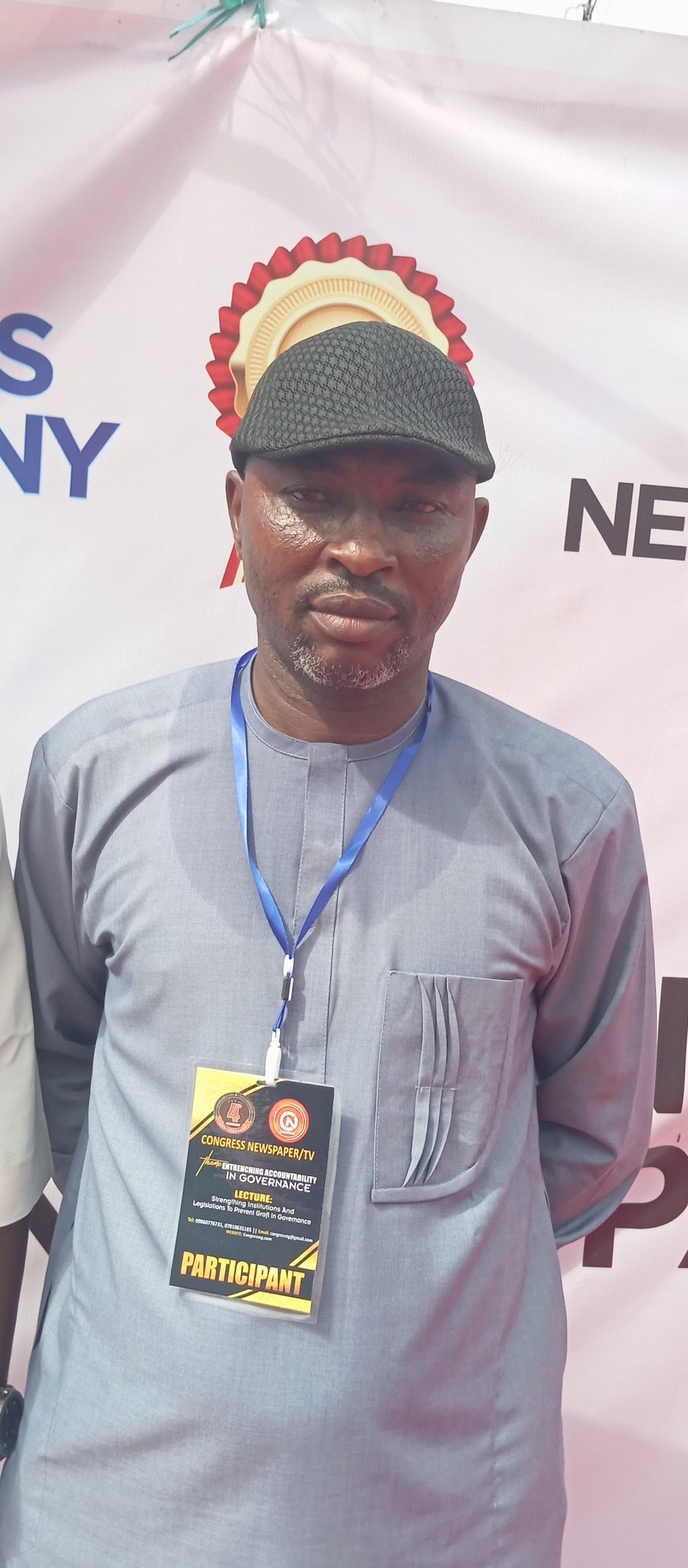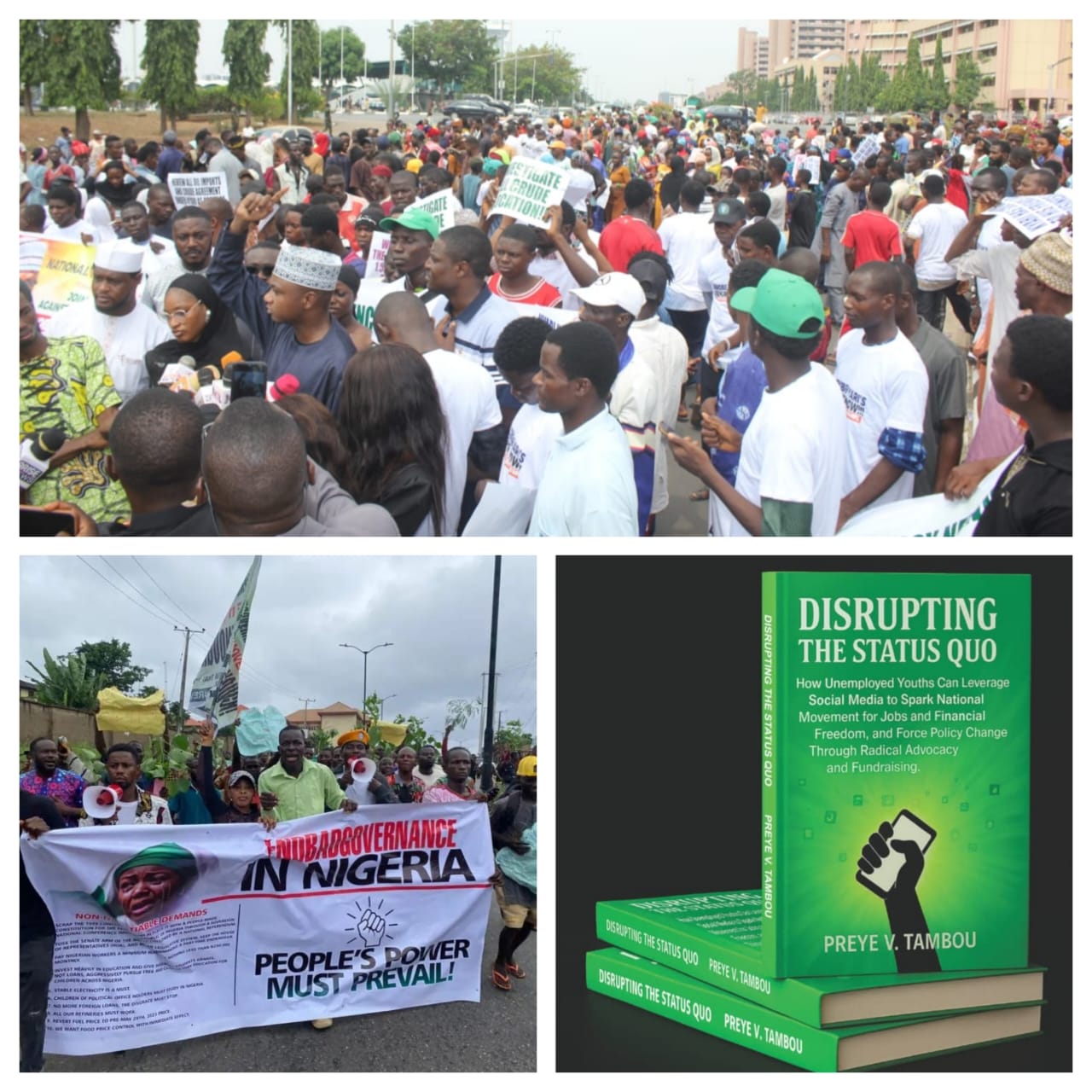
By Preye V. Tambou
“When the people fear the government, there is tyranny. When the government fears the people, there is liberty.” ~ Thomas Jefferson
” A State that abandons its youth has forfeited its right to govern. The new contract must be youth-enforced, not elite-enforced. The old order cannot supervise the birth of the new.” ~ Preye V. Tambou
By Comr. Preye V. Tambou, National President, Society for the Welfare of Unemployed Youths of Nigeria (SWUYN)
14th February, 2026
Every nation is held together by an invisible agreement: the social contract. Citizens surrender obedience, taxes, and loyalty; in return, governments guarantee security, dignity, and opportunity. This is the foundation of modern society but in Nigeria, that contract has been shredded. The State collects taxes but delivers no services. It demands patience but offers no jobs. It extracts loyalty but gives no dignity. The result is not a nation, but a hostage situation where the old elite hold the youth at ransom.
Unemployment is not just an economic statistic. It is evidence that the contract has collapsed. A government that cannot secure jobs, protect its people from hunger, and guarantee a path to prosperity has lost moral authority.
A History of Betrayal
Nigeria’s first generation fought for independence. They believed self-rule would mean shared prosperity but within a decade, corruption hollowed out the dream. The second generation endured military rule, believing democracy would restore justice but democracy became another pipeline of looting.
Each generation of youth has been told to wait. Wait for oil wealth to trickle down. Wait for reforms. Wait for empowerment schemes. Wait for tomorrow but tomorrow never came.
From the civil war to the oil boom, from SAP in the 1980s to the so-called “Vision 2020,” the youth have been excluded. They were the foot soldiers of democracy movements but were denied the dividends of democracy itself. They were the voters who carried candidates into office, only to be abandoned once the oath was sworn.
This is not oversight but structural betrayal.
The Generational Awakening
Today’s youth are different. They have seen the failures of the past, and are armed with tools their predecessors never had:
- Social media to expose lies in real time.
- Digital finance to fund their own movements.
- Global visibility that ensures their cries cannot be censored locally.
- Education and exposure that allow them to compare Nigeria with nations that once stood behind it but now soar ahead (Singapore, Malaysia, South Korea).
This generation no longer believes in the promises of the old order. They are ready to rewrite the social contract on their own terms.
What a New Social Contract Must Contain
- Jobs as a Right, Not a Favour
Employment is not a privilege for the connected few. It must be recognized as a constitutional right, with enforceable mechanisms for accountability. Nations that thrive – Germany, Japan, South Korea – invested massively in youth employment as State policy. Nigeria must follow or collapse. - Financial Freedom as State Obligation
The new contract must guarantee not only access to jobs but “tangible” capital. Youth must have legal protection against predatory banking, and access to low-interest loans, cooperatives, and digital funding platforms. - Transparency as Default
Every kobo spent in government must be visible to citizens. Youth must build civic tech platforms that track budgets and expose theft. Without transparency, no contract is binding. - Youth Power in Governance
Representation is not optional. The new contract must guarantee youth quotas in legislative and executive bodies, not symbolic “advisers” but real decision-makers with budgetary control. - Dignity of Labour
From agriculture to coding, art to activism, all forms of youth work must be protected from exploitation. A new labour code must be written with the voices of the unemployed and underemployed at its heart.
Case Studies: Nations That Rewrote Their Contracts
- South Korea (1960s–70s): Once poorer than Nigeria, South Korea invested in education, youth-led industry, and technology. Within two generations, it became a global powerhouse. Its social contract placed youth at the centre of national planning.
- Brazil (2000s): Through participatory budgeting and youth-led councils, millions of poor citizens gained direct influence on policy. Poverty fell, inequality narrowed.
- Tunisia (2011): Youth uprisings forced a dictatorship to collapse, proving that when the contract is broken beyond repair, disruption becomes revolution.
If others have rewritten their contracts, why not Nigeria?
The Digital Parliament
The streets are no longer the only arena for rewriting the contract. Twitter, Facebook, Instagram, TikTok, and WhatsApp are new chambers of debate. Here, youths legislate their anger, draft their manifestos, and hold mock trials of corrupt leaders but digital parliament must become more than noise. It must translate into:
- Youth charters that define demands clearly.
- Crowdfunded white papers that outline policy solutions.
- Online accountability dashboards where citizens track promises versus delivery.
The social contract of the future will not be signed in government houses alone, it will be negotiated in the cloud.
The Enemy: Policy Capture by the Elite
Every reform in Nigeria faces the same enemy: capture by the elite. Youth empowerment funds are looted. Training programmes are handed to ghost beneficiaries. Youth-led solutions are starved and laid to death by lack of support or capital. Even protests are infiltrated and derailed.
To prevent capture, the new contract must be youth-enforced, not elite-enforced. This means building independent watchdogs, decentralized funds, and digital platforms that are too transparent to hijack.
From Protest to Policy
Protests shake the palace walls, but policies change the laws. The new social contract requires both. #EndSARS showed the power of digital uprisings, but its weakness was lack of a structured policy agenda.
The next movement must pair its hashtags with policy drafts, its marches with budget alternatives, its chants with legislation proposals. Rewriting the contract means transforming agitation into administration.
The Moral Force of a Generation
When young people demand jobs, they are not begging. They are reminding the nation of its duty. When they demand financial freedom, they are not greedy. They are insisting on justice. When they demand power, they are not reckless. They are correcting imbalance.
Every moral argument is on the side of the youth. The elite only have weapons and money but the youth have history, numbers, and justice, and history always sides with the disruptors.
Mini-Manifesto Inserts
We will not inherit a broken nation; we will rebuild it.
We will not wait for permission to be included; we will demand it.
We will not beg for jobs; we will create them and force the system to respect them.
We will not be statistics of unemployment; we will be architects of disruption.
Towards the New Deal
Rewriting the social contract is not metaphor. It means drawing up concrete demands:
- National Youth Jobs Guarantee – Every graduate must be linked to either employment, entrepreneurship funding, or further training within one year of graduation.
- National Youth Capital Fund – Crowdfunded, diaspora-backed, and State-supported, controlled directly by youth councils.
- Constitutional Reform – Embed youth representation in governance at all tiers.
- Digital Rights Charter – Protect online spaces as civic arenas, not surveillance zones.
- Youth-Crafted Industrial Policy – From agritech to renewable energy, industries of the future must be designed by those who will live in that future.
The Inevitable Clash
No ruling class in history surrendered power willingly. Nigeria’s elite will resist this rewriting. They will mock, infiltrate, delay, and repress but repression is proof of weakness, not strength. The contract will be rewritten not because the old order agrees, but the youth refuse to relent.
The old contract is dead. It promised opportunity but delivered poverty. It promised democracy but delivered capture. It promised empowerment but delivered abandonment.
Now, a new contract is being drafted, not in marble palaces but in WhatsApp groups, TikTok videos, the hunger of the unemployed, and the defiance of the streets.
It is a contract written in hashtags, crowdfunded budgets, the sweat of agropreneurs, the beats of Afrobeats, the code of young innovators, in the courage of disruptors, and when it is signed, it will not be signed by presidents alone. It will be signed by millions.
The future will not be negotiated behind closed doors – it will be rewritten in the open, by the very youth who refuse to be erased.