By Ebikabowei Ekedikumo.
Nigeria is a strange drummer,
beating the drum with one hand
and closing its own ears with the other.
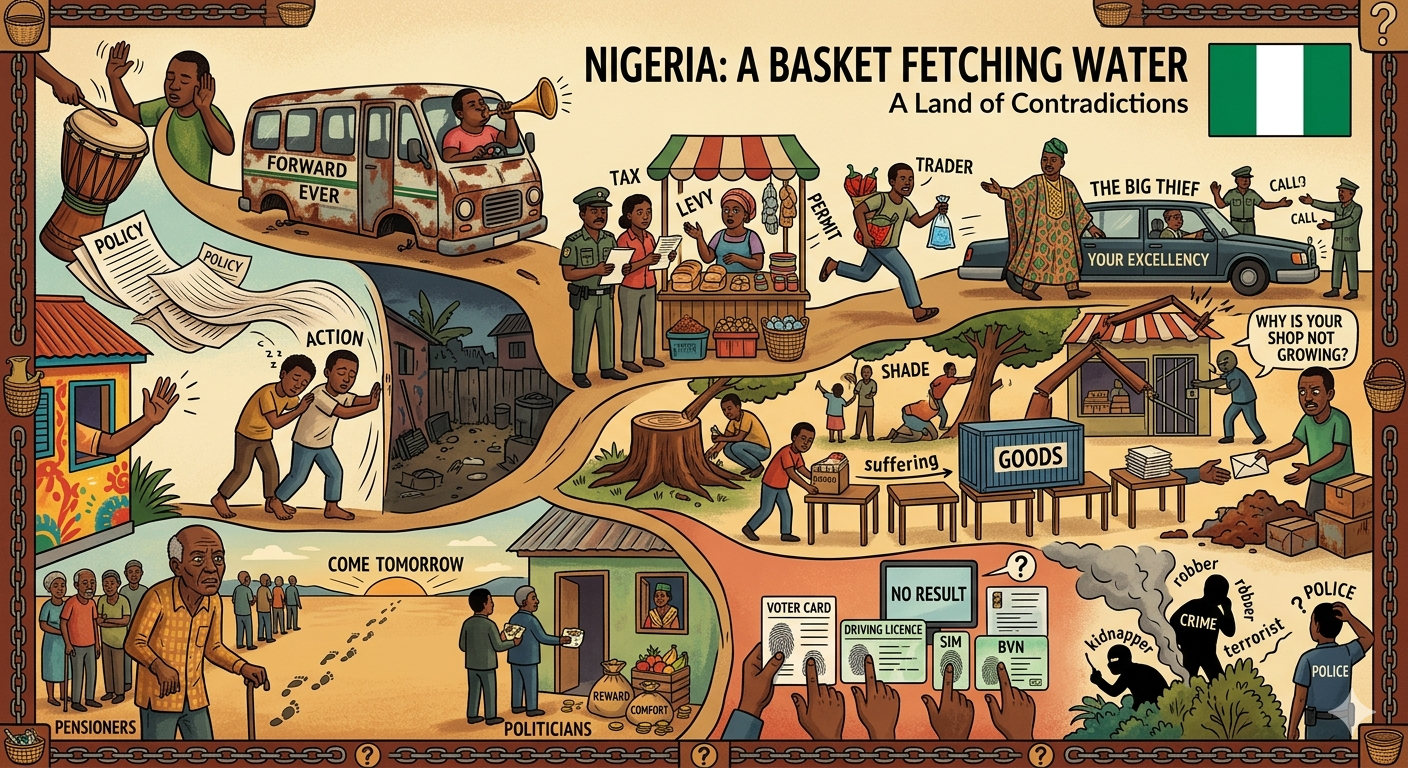
It writes “Forward Ever” on a dead bus
with no engine, no tyre, no brake,
yet the driver still blows the horn with pride.
Policy comes in fine English,
but action comes barefoot, sleepy, and late.
The mouth says, “Come and build,”
but the hand says, “Who asked you to come?”
The front of the house is painted bright,
but the back is full of dirt and smell.
Here, the small trader is treated like a bandit
A woman opens a little shop
to sell bread, soap, and small hope,
and government men fall on her
like crows on a weak chick.
One asks for tax,
one asks for levy,
one asks for permit,
one comes with a gun by his side.
The poor man who sells pepper and sachet water
is hunted like a robber.
But the big thief in agbada
drives past in a long convoy
and is called “Your Excellency.”
Nigeria says it wants jobs,
but it cuts down the tree
and asks for shade.
The small business man is squeezed dry
like wet cloth in strong hands,
and then blamed for not employing many people.
The state is like a landlord
who breaks the roof,
locks the gate,
drives away buyers,
and still asks the tenant,
“Why is your shop not growing?”
At the ports, goods grow old in waiting.
A container enters Nigeria
and begins a long journey of suffering.
It moves from table to table,
from stamp to stamp,
from one office to another,
through delay, silence, and hidden palms.
Goods sit in the sun
like prisoners without trial.
Rice learns to wait.
Machines gather dust and rust.
Medicine grows weak.
The trader counts loss upon loss.
The country says, “We support trade,”
but its support is like a python hugging a goat.
In this land, pensioners are treated
like old shoes thrown behind the door.
A man gives thirty-five years of work,
his youth, his strength,
his eyes, his peace,
and when he retires
he is told, “Come tomorrow.”
That tomorrow grows long legs.
It walks into months,
then into years.
The old man stands in line
like a dry tree begging for rain.
But the politician who spent four years in office
leaves with heavy reward:
big house, big cars, servants, comfort.
The worker gets hunger.
The ruler gets grapes.
What a hard country,
where labour ends in pain
and stealing ends in soft living.
Nigeria takes fingerprints
the way a child gathers stones.
Thumb here.
Thumb there.
For voter card,
for driving licence,
for SIM,
for BVN,
for national ID,
for pension,
for salary.
The citizen is pressed and scanned again and again
until he feels like a suspect in his own home.
The state has your finger,
your face,
your voice,
your name.
Yet when crime comes,
the file sleeps.
The police scratch their heads.
The robber disappears like smoke.
The kidnapper melts into the bush.
The terrorist is invincible ,
Only the yahoo boy is quickly found,
because his phone line did not fly away.
A land with plenty of data
and little result.
The courts also dance a strange dance.
If a politician coughs,
the law runs like a nurse.
If he fights over party ticket,
judgment grows wings.
One court order comes in the morning,
another at noon,
another before night.
Speed rises like mushroom after rain.
But let a poor man cry for justice
over torture,
unpaid salary,
wrongful arrest,
or a life broken by power,
his case is covered with dust
and fed with endless adjournment.
The file grows fat.
Hope grows thin.
In Nigeria, justice is a fast road for the mighty
and a narrow bush path for the weak.
Then comes the table of contracts.
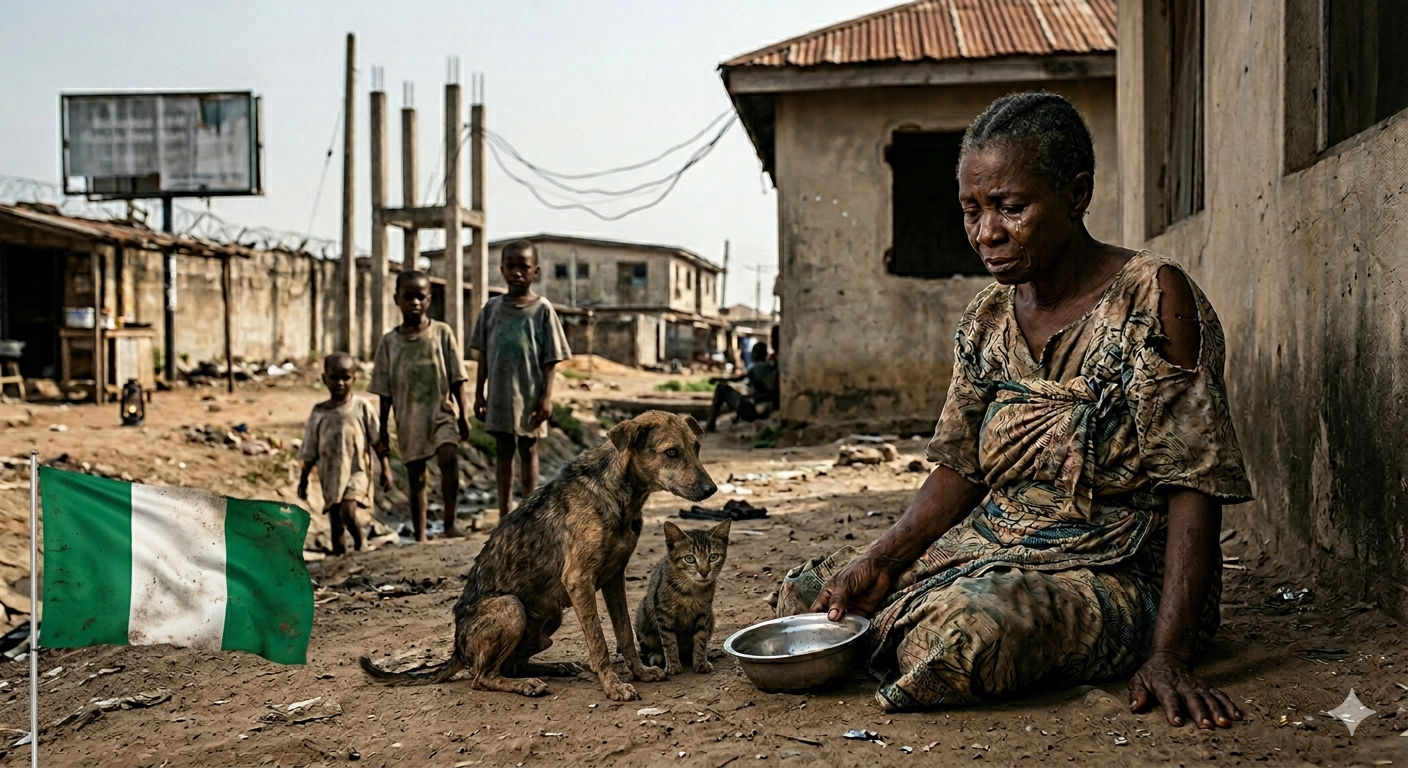
The country is bleeding from many wounds.
Children are out of school.
Hospitals are weak.
Roads are breaking open
like old dry heels.
Hunger walks freely in the street.
Terrorists and bandits smile at us,
One would think the leaders
would gather at the FEC meeting
to fight these troubles.
But after meeting,
the proud news comes out:
from the minister
contracts have been approved
for chairs, bins, paint,
and all kinds of little things.
Contracts, contracts, contracts—
as if government is a market stall
and leadership is only buying and sharing.
The leaders sit like guests at a feast
while the house burns behind them.
Nigeria is very good at waste.
It can make sense disappear
like a magician before a crowd.
It can turn rich land into hunger,
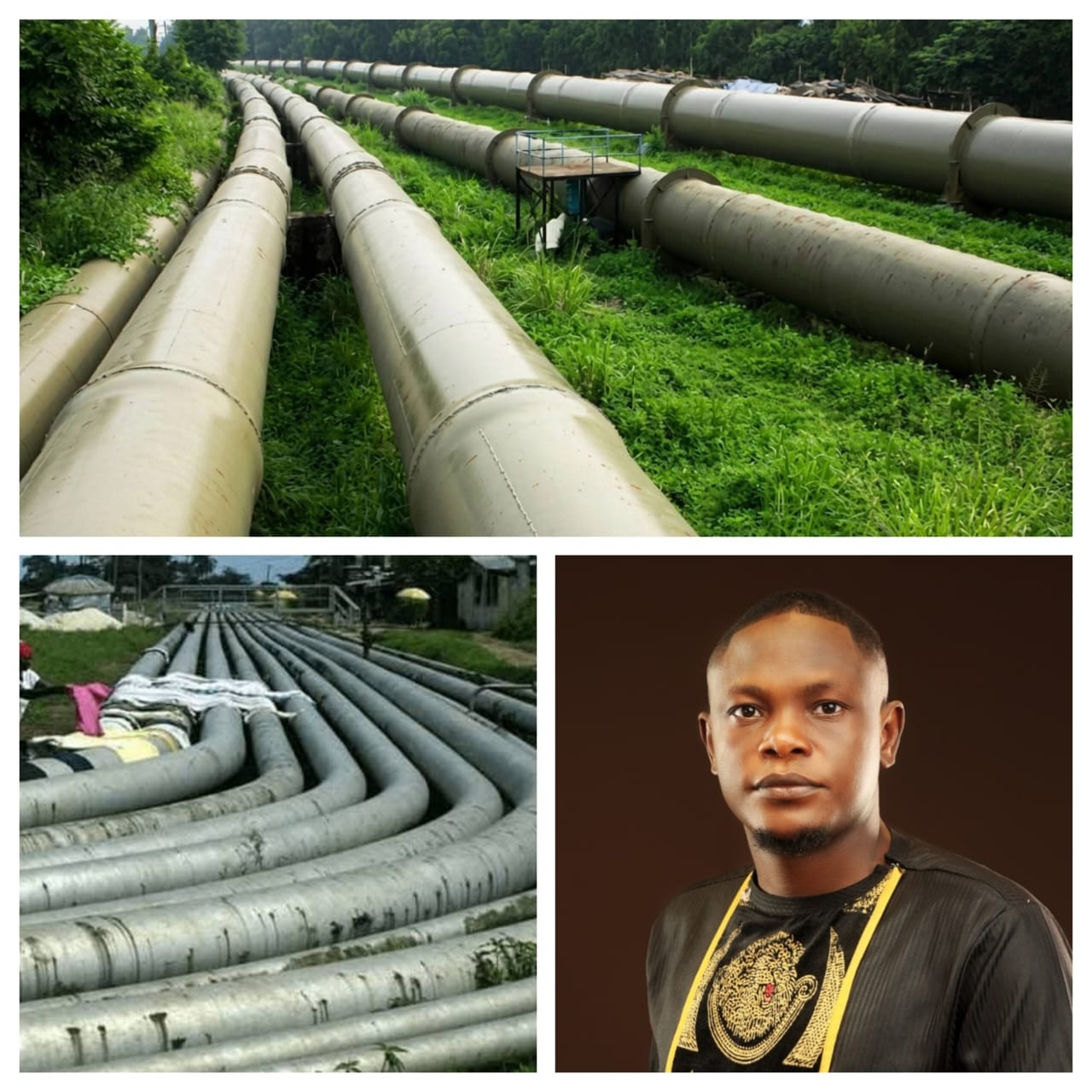
oil into darkness,
law into drama,
and leadership into greed.
It can carry water in a basket
and still hold a meeting on how to save water.
It can preach change
with one hand on the Bible
and the other hand inside the biscuit tin.
It is like a man smoking
under a sign that says “No Smoking,”
coughing out orders
while burning himself.
O land of many strange ways,
loud in talk, weak in order,
big in body, small in common sense.
A place where the ladder is broken
but everybody is told to climb.
A place where thieves make rules for honest people,
where the living stand behind the dead,
where the tomorrow of many
is sold to decorate the today of a few.
Nigeria is like a clown in borrowed clothes,
laughing with wet eyes,
dancing on thorns
and calling it progress.
Its foolish ways are now so many
they no longer knock at the door—
they sleep on the bed
in the the master’s bedroom
Still, every morning the people rise.
They patch hope like torn cloth.
They work, they pray, they trade, they endure.
They carry the nation on tired backs
while the state behaves like a careless landlord
collecting rent from a falling house.
This is the cry of that broken house.
It is about a land that says one thing
and does another,
a land where the voter suffers
and the politician smiles,
where law bends,
where trade is choked,
where old workers are forgotten,
and where public money is shared like meat at a feast.
Nigeria is a basket full of holes
still used to fetch water.
It is a lamp full of oil
yet giving little light.
And so the people sing with cracked voices,
because if laughter comes,
it is only tears wearing a mask.
EBIKABOWEI KEDIKUMO – writes from Ayakoromo Town, Delta State